



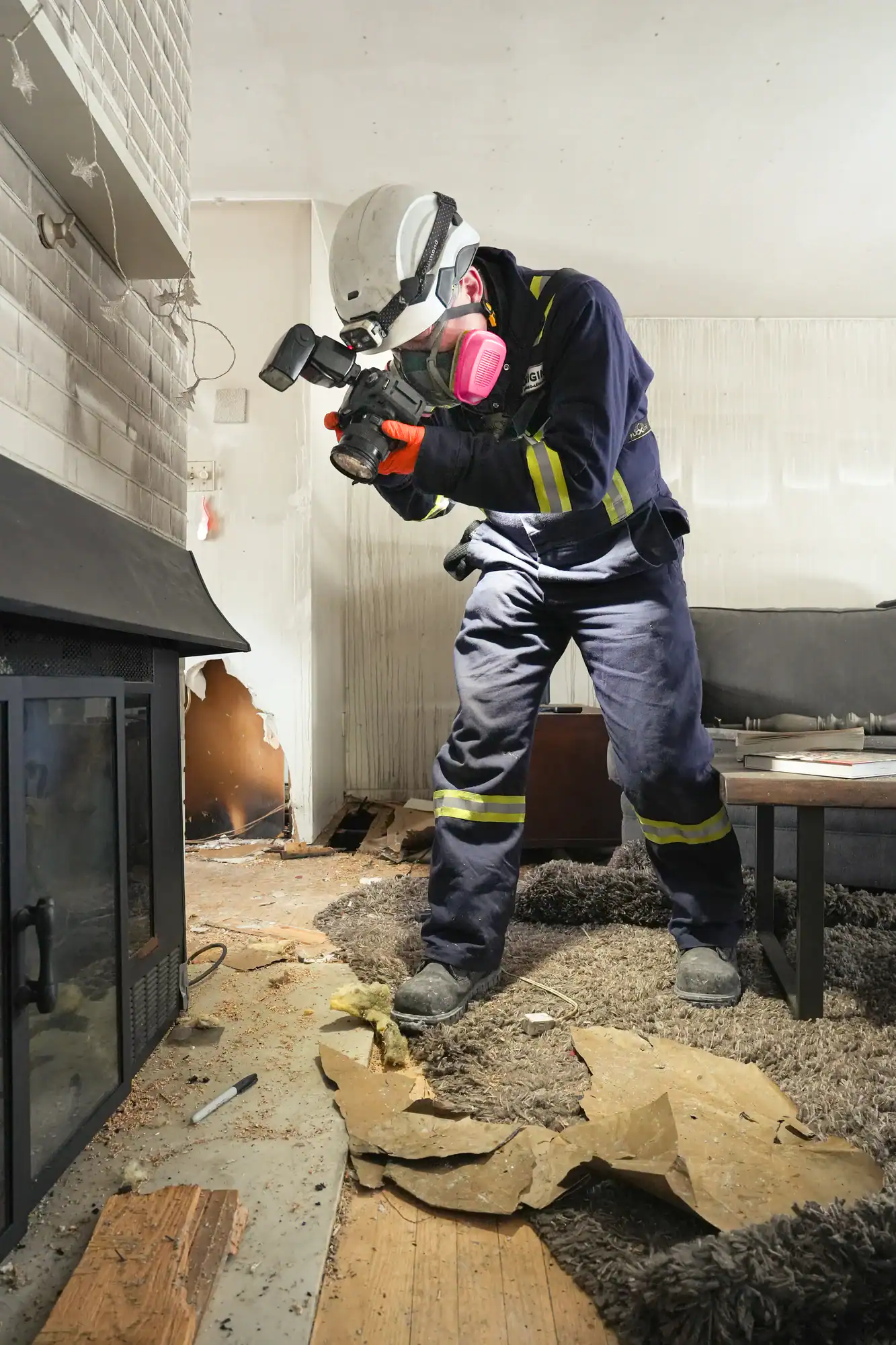
Did you know that the NFPA 921 guide is an everyday reference for fire investigators at Origin? They rely on the methodology described in NFPA 921 to conduct their investigations. This rigorous framework allows them to ensure that investigations are based on recognized scientific principles applied internationally.
Among other things, NFPA 921 outlines the scientific methods used to analyze charring and fire spread patterns, examine the electrical system, and collect witness statements, with the goal of determining the origin and cause of a fire.
The National Fire Protection Association (NFPA) is a U.S. organization recognized worldwide for publishing standards and reference documents on fire prevention and protection. Among these publications, NFPA 921, “Guide for Fire and Explosion Investigations”—a definitive reference in the field—has established itself as an indispensable tool.
A Guide, Not a Standard
Unlike some NFPA publications, NFPA 921 is neither a standard nor a code, but rather a guide. Its primary objective is to guide professionals in their fire and explosion investigations, enabling them to rely on rigorous scientific principles.
History and Distribution
The first English-language edition of the guide was published in 1992. Since then, a new version has been published every three years to reflect changes in the field. However, the one and only French-language version accredited by the NFPA was published in 2014, with no subsequent updates.
A Global Reference Document
NFPA 921 is now recognized as the only globally accepted reference document for fire investigation. It can be used by both public agencies responsible for investigations and private-sector experts hired by insurance companies or in the context of legal disputes.
A Rigorous Methodology
The guide emphasizes a scientific approach to fire investigation, which is based on a two-step methodology:
- Determining the point of origin of the fire;
- Analysis of ignition sources to identify the probable cause of the fire.
Although NFPA 921 does not provide an exhaustive analysis of all possible causes of fire, certain causes are addressed in greater detail, particularly arson. In addition, an entire chapter is devoted to electrical systems.
The NFPA 921 guide is used as a reference in fire investigation training, is recognized by courts in both Canada and the United States, and is applied in judicial investigations and private expert assessments.
At Origin, we have established connections with European experts and have found that this guide is followed by experts in both Europe and the Americas.